The Real Impact of Clean Water Projects in Local Communities
WATER & COMMUNITY DEVELOPMENTSOLAR ENERGY & ENGINEERINGSOMALILAND
By Eng. Ahmed Abdulahi “Day Kamaandoo”
5/8/20244 min read
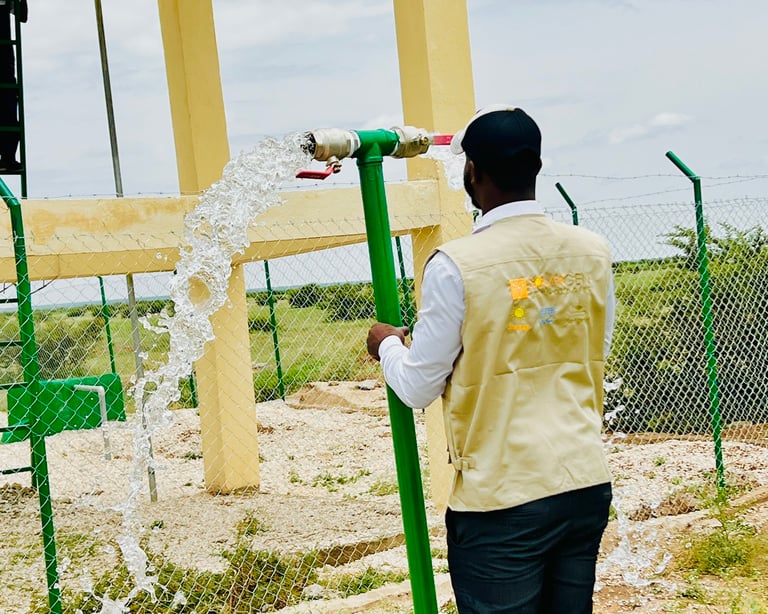
Clean water is one of the simplest things in life, yet for many communities in Somaliland it is still one of the hardest to access. Every time I visit a rural area to assess a borehole, survey a site, or manage the installation of a solar water pumping system, I see how water shapes people’s daily life. It affects health, education, livestock, farming, and even the hope people have for their future. This is why clean water projects are more than engineering work for me—they are part of community building and human development.
During the past years working on different solar water projects across Somaliland, I learned that the impact is never just technical. Yes, we install solar panels, inverters, pumps, and distribution systems, but what changes after that goes far beyond the equipment. A clean water project is often the starting point for a better life. I have witnessed this many times, especially in the borehole projects we completed in various regions. When water becomes accessible, the entire rhythm of a community changes.
In many rural villages, people used to walk long distances to fetch water, sometimes spending three to four hours each day. It was mostly women and young girls who carried this burden. When a solar water system is installed and a reliable source becomes available near their homes, this daily struggle disappears. Girls return to school, women have more time for other responsibilities, and families finally get the chance to focus on improving their livelihood instead of surviving.
Another important change I see after every project is health improvement. Before clean water was available, communities depended on shallow wells, ponds, or seasonal water sources that were easily contaminated. This contributed to waterborne diseases, especially in children. After a properly installed borehole and a clean distribution system are in place, the number of illnesses reduces significantly. Parents worry less, and the community feels more stable.
The economic benefits are also remarkable. In Somaliland, where livestock and small-scale farming play a major role in people’s income, water is the key factor. When water is scarce, animals become weak, farms fail, and families lose their main source of survival. But with a reliable water system, livestock stay healthy, milk production increases, and small farms can operate throughout the year. Even a simple vegetable farm that didn’t exist before can become an income source for a family. Farmers become more confident to invest in their land because they know the water will not disappear after one season.
One of the most memorable moments for me was returning to a site one year after installation. The place, which used to be dry and empty, was now green with trees and small farms. The people told us that the project changed their lives completely. This is the emotional side of engineering that not everyone sees. You work with panels, pumps, cables, and pipes, but in the end, you are helping people build a better life.
When we work on borehole projects—whether it is drilling supervision, solar system design, pump selection, installation, or the final testing—we follow technical standards so the system lasts years without major issues. But what makes a project successful is the connection between the technical work and the real needs of the community. Understanding the flow rate, the depth of the borehole, the right pump size, and the correct solar configuration is important. But listening to the community, learning their challenges, and planning for sustainability is what completes the project.
Every clean water project requires long-term thinking. It is not enough to provide water today; the system must work for the next ten years. This is why preventive maintenance, proper training for the local operators, and choosing quality materials matter. When we select a pump or inverter, when we calculate the solar array size, or when we double-check the protection and control systems, we know the community is trusting us with something essential. We cannot take shortcuts. A failure in a water system is not just a technical failure—it is a disruption in people’s lives.
Another important part of the impact is community ownership. I always encourage local leaders to take responsibility for protecting the site, maintaining the system, and managing fair distribution. When the community understands the value of the system, they protect it like their own property. This is how sustainability becomes a reality, not just a statement on paper.
Somaliland is a country facing climate challenges, long dry seasons, and increasing demand for water as population grows. Clean water projects, especially solar-powered systems, play a major role in creating resilience. Solar energy reduces the cost of running water systems, frees communities from depending on diesel generators, and ensures water even when fuel is not available. This modern technology has become a lifeline for many villages.
Whenever I finish a project—whether it is a simple rehabilitation of a water point or a full installation of a solar pump and distribution system—I take a moment to reflect on the impact. It reminds me why this work matters. For the community, it is not just “a project.” It is their future. It is their children’s education. It is their health. It is their farms and animals. It is their dignity.
In many ways, clean water is the first step toward development. Once water is solved, everything else becomes possible. Schools perform better when students are healthy. Local markets grow when people have more time and energy. Families save money that was previously spent on buying water. New opportunities start to appear naturally.
Our borehole projects across Somaliland prove this every time. The transformation of dry areas into green fields, the return of families to their land, the new farms that started because water became available—all these are signs that clean water projects are shaping a new future for our communities.
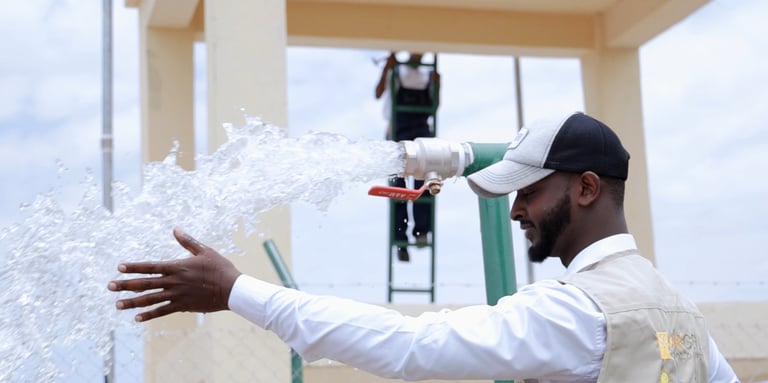
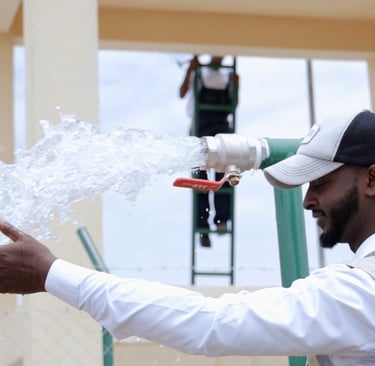
For me, the most rewarding part of this work is seeing the hope in people’s eyes when they see water flowing for the first time. You can feel the relief, the happiness, and the belief that tomorrow will be better. It is a reminder that engineering is not only about numbers and designs; it is about serving people. It is about using knowledge to create real, visible impact on the ground.
Clean water is a basic human right, and every community deserves it. As we continue to build more boreholes, install better solar systems, and upgrade our technical standards, I believe Somaliland will move closer to a stronger, healthier, and more sustainable future. And I am proud to be part of that journey—one water project at a time.
Contact
Reach out to discuss projects or ideas.
Phone
ahmeddey09@gmail.com
+252 63 4452591
© 2025. All rights reserved.